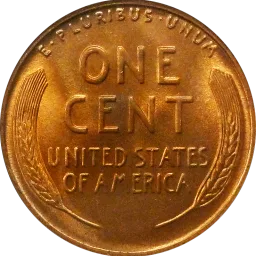
1922 values by mint mark
| Coin | Mint | Mintage | Value, worn |
|---|---|---|---|
| 1922-D | Denver | 7,160,000 | $8 to $39 |
Not sure which one you have? Scan it, and Coin Finder reads the mint mark for you.
Scan your coinIs yours the 1922 "no D"?
1922 "no D"
$255 to $872
A worn Denver stamp (die) left no D mint mark under the date. Only the version with a strong, clear back, from one particular pair of dies, is the valuable one. Many fakes have had the D removed.
The app shows this checklist for the coin you scan.
Many coins sold as "no D" are fakes, so the back matters as much as the missing letter.
Why a 1922 penny can have no mint mark
All 1922 cents were struck in Denver, the only mint that made cents that year. That means every normal 1922 cent should have a D under the date.
The "no D" error happened because a worn Denver die left no D mint mark on some coins. The coin was made in Denver, but the mark did not strike up.
How to tell
Use a bright light and a magnifying glass. Go in this order:
- Check the date. It must read 1922. Other years have their own guides, such as the 1914 guide and the 1931 guide.
- Look under the date for the D mint mark. If you see a clear D, you have a regular 1922-D cent.
- If there is no D, look at the surface where it should be. Is it smooth and undisturbed, or scratched, dented or rough? Many fakes have had the D removed, and a removed mark may leave marks behind.
- Look at the back. Only the version with a strong, clear reverse, from one particular pair of dies, is the valuable one. The back should look sharp and complete, not soft or washed out. A coin with no D and a weak back is not the one collectors pay for.
Worn-off D or real "no D"?
A coin that has circulated for decades loses detail, and a small mint mark can wear down with the rest of the surface. That is one reason a 1922 cent can seem to have no D. On the real error the D never struck up in the first place, so the area under the date is simply blank.
The difference is easiest to see on the back. If the coin is worn flat all over, or the area under the date looks scraped, be careful.
Which 1922 to keep
Even the regular 1922-D is a scarce date, so any 1922 cent is worth keeping. A genuine "no D" is worth far more, and that gap is why fakers target this date.
Condition matters
A coin with sharp lettering and clear wheat lines sells for more than a smooth, dark one. Wear lowers value. Do not clean your coin. Polishing, scrubbing or dipping a cent lowers its value and can hide the very marks you need to check.
If you think you have a real "no D," have it looked at by a professional grading service or a trusted dealer. Authentication is worth it here because of the fakes.
Other Lincoln wheat cents to check
If you are going through a jar, other wheat cents matter too. The 1909 guide covers the most valuable date, and the 1943 guide explains the steel and copper mix-up. The 1955 guide covers the doubled date. For the whole series, see Lincoln wheat penny values or all Lincoln cents.
Metal value
- $0.04 for bronze (95% copper, 2.5% tin, 2.5% zinc, 3.11 g). The 2.5% tin is left out: it adds a small fraction of a cent.
Questions
Is a 1922 penny with no mint mark valuable?
A genuine "no D" cent is, and it is worth far more than a regular 1922. But many coins sold this way have had the D removed, and a worn coin can lose its mark to wear. Check the back and the spot under the date before you hope.
Why does the 1922 penny have a D at all?
The D stands for Denver, the only mint that made cents in 1922. Every normal 1922 cent has it.
How do I know if the D was removed?
Look at the spot under the date with a magnifying glass. A removed mark may leave scratches, dents or a rough surface. If you are unsure, ask a grading service or a trusted dealer to check it.
Should I clean a 1922 penny before selling it?
No. Cleaning lowers a coin's value and can hide the marks a buyer needs to check.
More Lincoln cents to check
Check the rest of your change
Over 1,100 US and UK coins by year and mint mark, each value with its source and the date it was checked.
