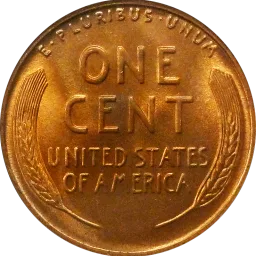
1943 values by mint mark
A coin with no mint mark was struck in Philadelphia.
| Coin | Mint | Mintage | Value, worn |
|---|---|---|---|
| 1943 | Philadelphia, no letter | 684,628,670 | $0.13 to $0.43 |
| 1943-D | Denver | 217,660,000 | $0.15 to $0.70 |
| 1943-S | San Francisco | 191,550,000 | $0.35 to $0.88 |
Not sure which one you have? Scan it, and Coin Finder reads the mint mark for you.
Scan your coinIs yours the 1943 copper (bronze) cent?
1943 copper (bronze) cent
$100,000 or more
Minted by mistake on a leftover bronze blank instead of steel. A real one is brown and does not stick to a magnet. Most are fakes: coated steel cents, or 1948 cents with the date changed.
Listed for 1943, 1943-D, 1943-S.
The app shows this checklist for the coin you scan.
The 1943 cent was made of zinc-coated steel to save copper during the war, so a normal one is silver-gray and sticks to a magnet. Nearly every brown 1943 cent offered for sale is a fake, so the magnet is the first test, not the last.
How to tell
- Check the date. The coin must read 1943 on the front. The back shows two wheat ears.
- Look at the color. A silver-gray coin is the normal steel cent. A brown coin is the one to look at more closely.
- Hold a magnet to it. A real steel cent sticks. A real copper 1943 cent is brown and does not stick.
- Check the mint mark. Look for a D (Denver), an S (San Francisco), or no mint mark (Philadelphia). The mint mark tells you which mint made the coin. The error is listed for all three.
- Compare the date. If a brown coin does not stick to a magnet, look closely at the last digit of the date. Some fakes are 1948 cents with the date changed.
The common steel cent
All three mints made steel cents in huge numbers, so none of them is rare. The one to keep is the 1943-S: San Francisco made the fewest, and a worn one is worth $0.35 to $0.88, the most of the three.
A gray 1943 cent from your change is worth keeping as a curiosity, but it is not a windfall. A bright one with little wear is worth more than a dark, spotted one.
The 1943 copper error
A few 1943 cents were struck by mistake on bronze blanks left over from 1942. A real one is brown, does not stick to a magnet, and is worth $100,000 or more from any of the three mints. Its condition decides how much more.
If a brown 1943 cent passes the magnet test, do not assume it is real. A professional grading service such as PCGS or NGC can examine it.
The mirror-image mistake also exists: a steel 1944 cent. It is also a very valuable error, and the same magnet test applies.
Condition
A steel cent with sharp detail and no rust spots is worth the top of its range, and a worn, dark one the bottom. Do not clean a coin you think might be the error. Cleaning lowers a coin's value, and it can make a real one harder to judge.
Other wheat cents to look for
The wheat cent ran from 1909 to 1958, so other years in your jar matter too:
- The 1909 cent with the designer's initials V.D.B. on the back and an S mint mark (San Francisco) is the most valuable date. A 1909 V.D.B. cent with no mint mark is not that coin.
- The 1922 cent with no D mint mark is a known error.
- The 1955 cent with a doubled date and lettering is another well-known error.
For the whole series, see the Lincoln wheat penny guide or all Lincoln cent values.
Metal value
- A steel cent's metal is worth only a fraction of a cent.
Questions
Why is my 1943 penny silver-colored?
It was made of zinc-coated steel, not copper. The government used steel for the 1943 cent to save copper. A silver-gray color that sticks to a magnet is exactly what a normal 1943 cent looks like.
Is a 1943 penny that does not stick to a magnet valuable?
Possibly, but be careful. A real copper 1943 cent is brown and does not stick to a magnet. Most brown coins sold as this error are fakes, so have a grading service look at it before you count on any value.
Does a mint mark change the value?
For a common steel cent, a little: the 1943-S is worth the most of the three. The copper error is worth the same from any of the three mints.
Should I clean a 1943 penny?
No. Cleaning lowers a coin's value, and a worn, dirty coin is still better left as it is.
More Lincoln cents to check
Check the rest of your change
Over 1,100 US and UK coins by year and mint mark, each value with its source and the date it was checked.
